Käthe Swaback, Program Officer
Cultural participation can be part of a stronger cross-sectoral approach to whole-person health
“Your zip code is a better predictor of your health than your genetic code.” – Dr. Regina Benjamin
Mass Cultural Council sees arts and culture as a necessary ingredient for public health, one that is often neglected or underappreciated.
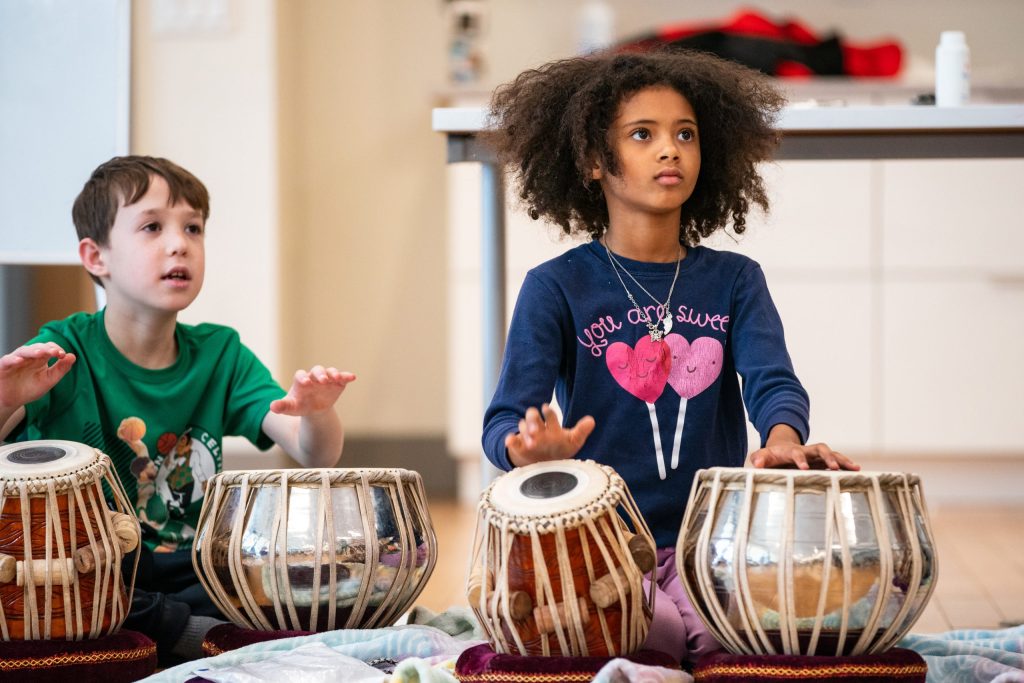
Research shows that access to, and engagement in, arts and culture can positively influence health, by encouraging physical activity, reducing stress and isolation, and helping with the substance recovery process. For example:
- The arts can help regulate emotions and enhance your mental health. Arts and cultural engagement can be used to support emotional regulation, enhance well-being, and enhance mental health, including reducing the risk of developing mental health problems.
- Arts and culture benefit your brain. Studies have shown that the arts release neurotransmitters like serotonin and dopamine, and engagement in the arts lowers cortisol, offering protective qualities for one’s immune system. Just 45 minutes of art-making can lower the stress hormone cortisol by 25%.
- Engaging in the arts may help you live longer. The arts have protective associations lowering risks of depression and dementia in later life and lower levels of chronic pain and frailty, and even a longer life.
- Arts and culture can connect and unify communities. According to a study by Americans for the Arts:
-
- 72% of Americans believe “The arts provide shared experiences with people of different races, ethnicities, ages, beliefs, and identities.”
- 63% agree that the arts “help me understand other cultures in my community better.”
It’s been proven that arts and culture help communities to connect and that connected communities enjoy better population-level health, experience greater economic prosperity, and reduced levels of violence and crime.
The World Health Organization’s 2019 groundbreaking study, What is the evidence on the role of the arts in improving health and well-being?, allowed for research into the connection between arts and health to be increasingly recognized across the globe.
In the US, these organizations have all dedicated initiatives, research, and/or support in investigating how the arts contribute to well-being and can increase the health equity in communities:
Arts and culture as part of a cross-sectoral approach to health
Our health is more than the summary of our most recent doctor’s visit. It’s also shaped by the world around us – our neighborhoods, schools, and social environments.
It’s determined by conditions that are not evenly distributed and systems whose impacts set in far upstream of the doctor’s office. A healthy society needs not only access to strong medical care but also access to connection, creativity, and other ways to create healthier conditions and environments that surround us.
Mass Cultural Council believes arts and culture can be part of a stronger cross-sectoral approach to whole-person health by focusing on Social Determinants of Health (SDoH) and contribute to upstream strategies to better address social, economic, environmental, or cultural conditions that shape health. We are working towards systems change where arts and culture can help to address issues of health equity and SDoH by supporting greater access, opportunities, creative connections, and engagement with communities.
SDoH – also known as Social Drivers of Health – refers to the conditions in which people are born, grow, live, work, and age. These factors are not just connected to your health; they affect functioning, outcomes, quality of life, and the overall health of communities. According to Healthy People 2030, SDoH can be grouped into five main domains:
- Economic Stability
- Education Access and Quality
- Health Care and Quality
- Neighborhood and Built Environment
- Social and Community Context
How important are these social determinants? Some studies estimate that Social Drivers of Health – including socioeconomic and environmental factors – influence up to 80% of health.
Many studies on economic well-being and health show that:
- Higher income levels are associated with better health outcomes.
- Individuals with higher education levels tend to have better health and longer life expectancy.
- Communities with grocery stores offering nutritious food options have lower rates of diet-related diseases.
- Secure and affordable housing contributes to better health outcomes.
The opposite is also true: discrimination, economic inequality, and the historical oppression of specific groups consistently lead to worse health outcomes.
As an example, a recent Boston Public Health Commission report found people living just two miles apart in Boston can have a life expectancy gap of 23 years on average. The average life expectancy in Back Bay vs. Roxbury is 92 vs. 69 years.
Arts and culture are crucial to a multi-faceted approach to building connected communities, increasing health equity, social connection, and providing other bridges to address SDOH – all at a much lower cost than conventional health care practices. Massachusetts has an opportunity to redefine the value of a culturally engaged life as one that comes with health benefits.
Making real change to our health systems
“We are standing on the verge of a cultural shift in which the arts can deliver potent, accessible, proven health and well-being solutions to billions of people.” – Dr. Susan Magsamen, Founder and Executive Director of the International Arts + Mind Lab
We must dare to see how “radical collaboration” is possible. To make real upstream change in our health systems, we need the advocacy of not only of our cultural sector, but also our political partners, the medical field, housing, education, thought-leaders, and communities to see the vast amount of data and to speak their own truths about how arts connect us and are vital to a healthy society.
Further Reading
- World report on social determinants of health equity
- What is health equity?
- Our Epidemic of Loneliness and Isolation: The U.S. Surgeon General’s Advisory on the Healing Effects of Social Connection and Community (2023).
- What is the evidence on the role of the arts in improving health and well-being? A scoping review
- Health Equity Compact | Advancing Health Equity in MA
- Health of Boston 2023-2024 reports with their Executive Summary
- Arts and Culture: A Necessary Component to Address Unmet Social Needs and Advance Individual and Community Well-Being and the Arts and Health Framework
- Your Brain on Art: How the arts transform us – Dr. Susan Magsamen
- Arts Cure: The Science of how the arts transform our health – Dr. Daisy Fancourt