Käthe Swaback, Program Officer
“What is worth standing up for?
Everything and anything that interferes
with the flow of our heartbeat,
that causes a tear to run down someone’s face,
that interferes with someone’s flow of life.
You’re supposed to stand up against injustices,
to protect one another.
You’re supposed to stand up against all injustices.
We are worth standing up for.”
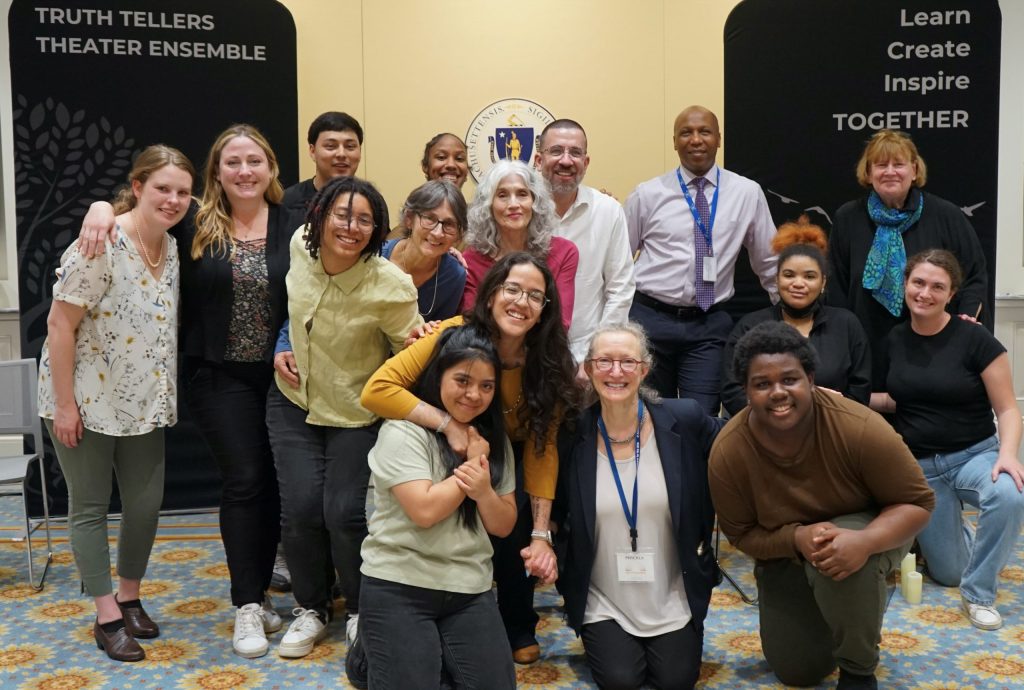
These powerful lines are the conclusion of “What is Worth Standing Up For?” performed by young people in the Truth Tellers Theater Ensemble, an inspired collaboration between Treehouse Foundation and Arts Integration Studio, directed by Priscilla Kane Hellweg. By engaging youth, elders, young adults, and community members with lived experiences in foster care, kinship, and adoption, they effectively offer innovative ways to connect, belong, and work towards thriving. The Truth Tellers have also made their personal stories of trauma, resilience, and their hopes for the future known “up the ladder of influence” by creating performances that raise awareness and inspire positive change in the child welfare system.
In Massachusetts, 47% of youth in foster care have over two family placement changes each year. Massachusetts is third from the bottom in state rankings in terms of stability. 29% of youth in foster care experience homelessness at some point. 20,000 youth age out of foster care each year in the US without a permanent family.
Their exposure to trauma, loss, relationship disruption, and lack of consistent adult attachment, is all very high and this is often paired with less access to health and mental health care. Furthermore, recent research co-published by HopeLab and Data for Progress shows that young people who struggle to meet basic expenses report poor mental health at more than triple the rate of those who live comfortably.
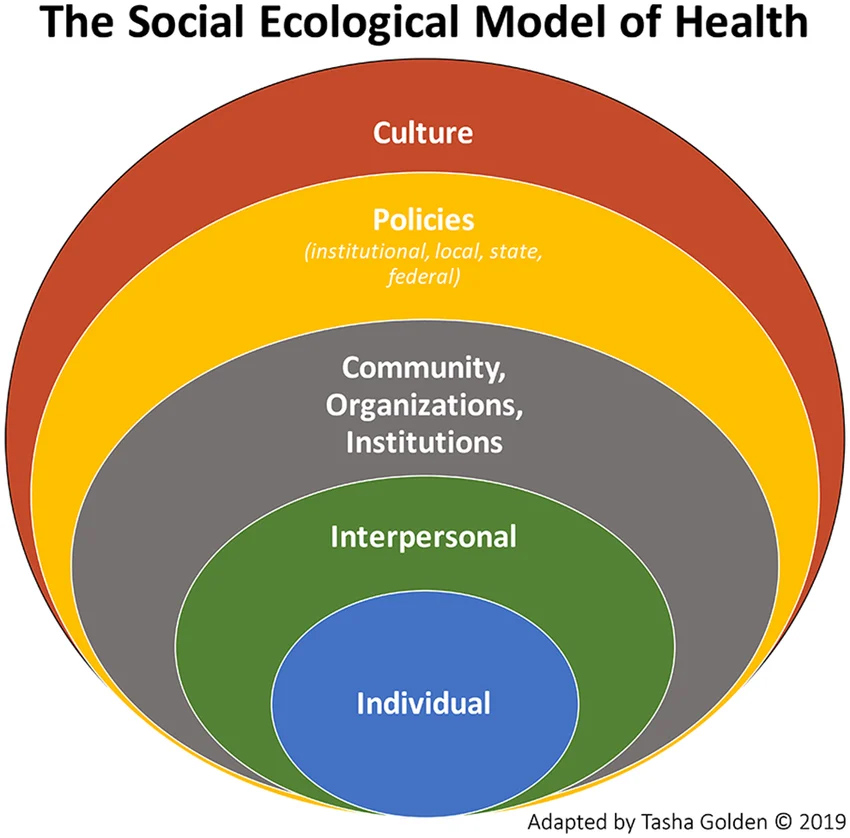
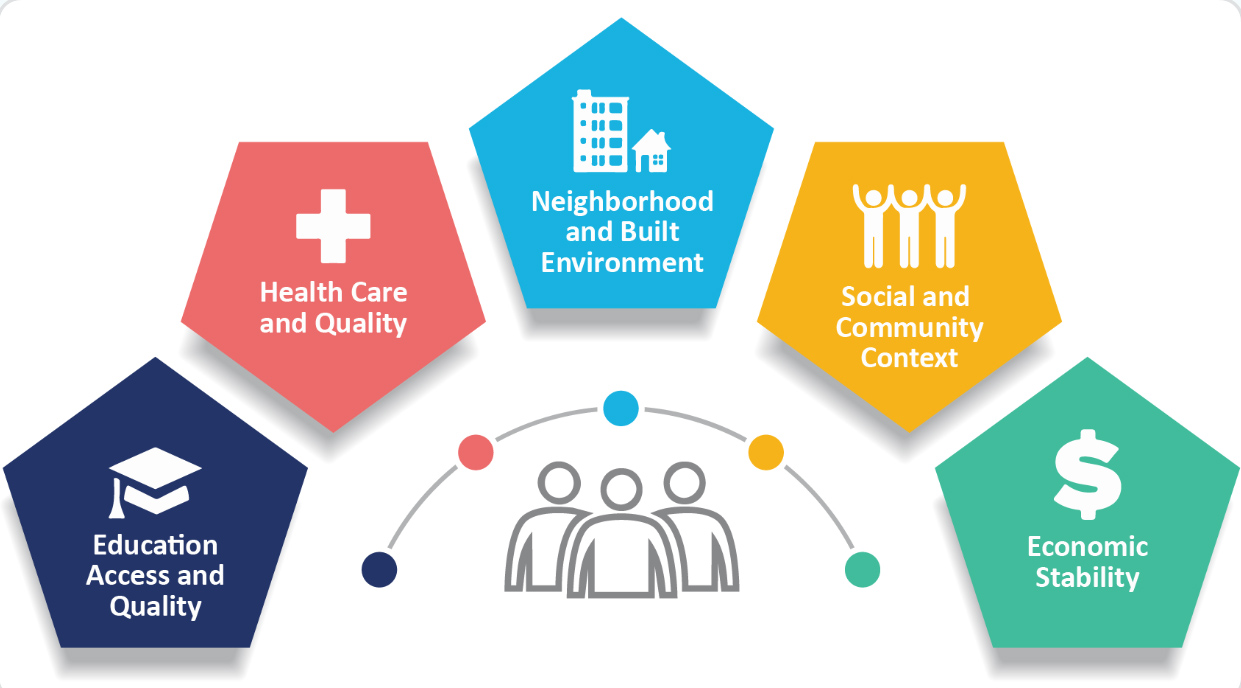
Previously in the blog I shared how the “non-medical” factors of Social Determinants of Health (SDOH)* contribute to health outcomes and how the socioecological model of health better embraces the complexity of how policies, systems, environments, and behaviors all affect one’s health. In this post are examples of how Creative Youth Development (CYD) programs often bridge these interlocking circles/systems and contribute to better health outcomes.
For youth in foster care who may often have their education disrupted across many schools, arts programs can serve as an anchor by supporting school attendance, increasing skills, and by nurturing the agency and space to rewrite their own narrative. The Truth Tellers Theater Ensemble not only addresses basic needs but also addresses the needs of young people to express their identities and see their collective survival skills, with their own sense of agency.
Arts help to restore their own control, choice, voice, meaning-making and other protective factors for long-term wellbeing. A young person summed up their view of their brave self at the end of the Truth Tellers performance, “I am Blessed. I am Beautiful. I am Compassionate. I am Capable. I am a Warrior. I am a Survivor.”
Through Mass Cultural Council YouthReach grants to Creative Youth Development programs, we support organizations who focus on the arts, humanities, and sciences and center youth voice, equity, and collective action in their communities. Because CYD programs prioritize ways to help young people develop their interests, relationships, and opportunities, they can help young people deepen and widen their connections with peers, mentors, and to their own education and career possibilities.
Architects of equitable thriving communities
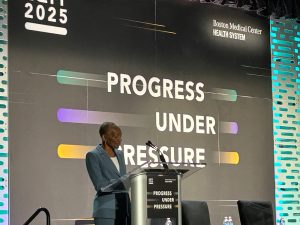
In the fall, I had the honor to attend the third annual EQTY 2025 conference in Boston, where Dr. Thea James, MD, MBA, (Co-Founder of Health Equity Accelerator, Vice President of Mission, & Associate Chief Medical Officer, BMC Health System) spoke about the importance of refusing to accept that poor health outcomes are “inevitable, predictable, and acceptable just because they have been normalized.”
We were reminded to think about resilience not in the traditional terms of individual grit but rather, “resilience is collective.” James challenged the health sector to fundamentally reexamine and reimagine their roles “not as healers of individuals but as architects of equitable, thriving communities.”
In a recent Wallace Foundation report, “The Time Has Come for Youth Development” the research notes that youth development now is “recognized as an interconnected system rather than a set of isolated programs.” They also see how these programs are “part of broader ecosystems of support—schools, families, communities, and organizations—that must work together for young people to thrive.”
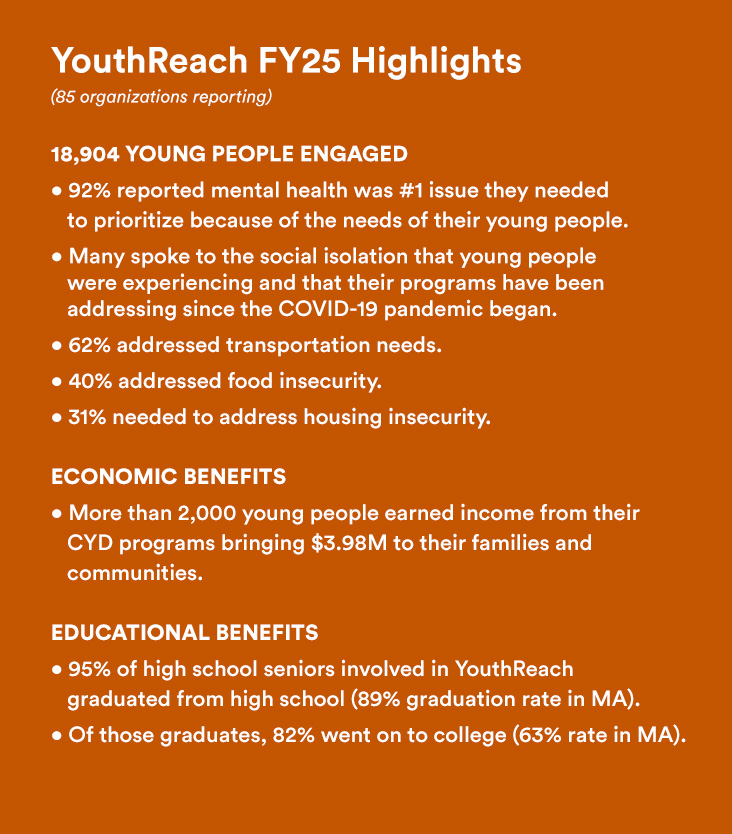 benefits for young people engaging in the arts are that they stay in school longer, have lower drug use, and make better decisions across their lifespan, there needs to be more data shared about how Creative Youth Development programs often work as “architects” in creating thriving communities.
Not afraid to tackle the complex problems that communities face, the CYD program Elevated Thought in Lawrence, offers collaborative creative solutions.
In October 2025, with their beautiful invitation video to their KickBack event and Worldmaking theme, they directly asked for a creative response to the question, “What does a sustainable civilization look like, and how can we get there?”
Centering values of creativity and collective action, each team was charged to “imagine and build a just, sustainable, and thriving society.” The installation of their creative answers culminated with a robust evening of immersive experiences full of creative writing, design, architecture, visual arts, film, and impressive music—all looking at what the world could look like through hands-on community building with youth voice at the center.
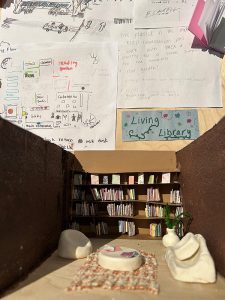
One of the joys of this full evening was viewing a myriad of creative projects. An example was The Living Library addressing the issues of mental health and housing. The team of young architects wrote,
“The living library is an innovative push for the betterment of our community. Our current library offerings don’t support some of our community’s biggest concerns to their fullest extent—problems such as housing and mental health.
The living library features a community kitchen and cafeteria where everyone is welcome to eat, a zen garden for folks to decompress and unwind, as well as numerous facilities for communities to gather, plan, and collaborate,” – Brayden Castellano, Eliana Arias, Meily Rodriguez, Suri Alvarez, Tommy Ramon Castro, and Hadassah Sepulveda.
Dr. Tasha Golden reminds us why and how we are qualified to be part of a transformational collective:
“Creativity is what allows us to refuse the status quo, imagine otherwise, and take bold action to build something better. This is arts in health.”
* The term “social drivers” may be a more “accessible term and better emphasizes the dynamic, mutable nature of the factors that impact health (drivers), rather than portraying them as static or fixed (determinants). “ For more on social drivers of health, see Appendix A1 of the Arts on Prescription: The Field Guide for US Communities