Fiscal Year 2027 H2 Budget Hearing
March 9, 2026
Good afternoon, Chair Diggs, Chair Brady, and through you to the Members.
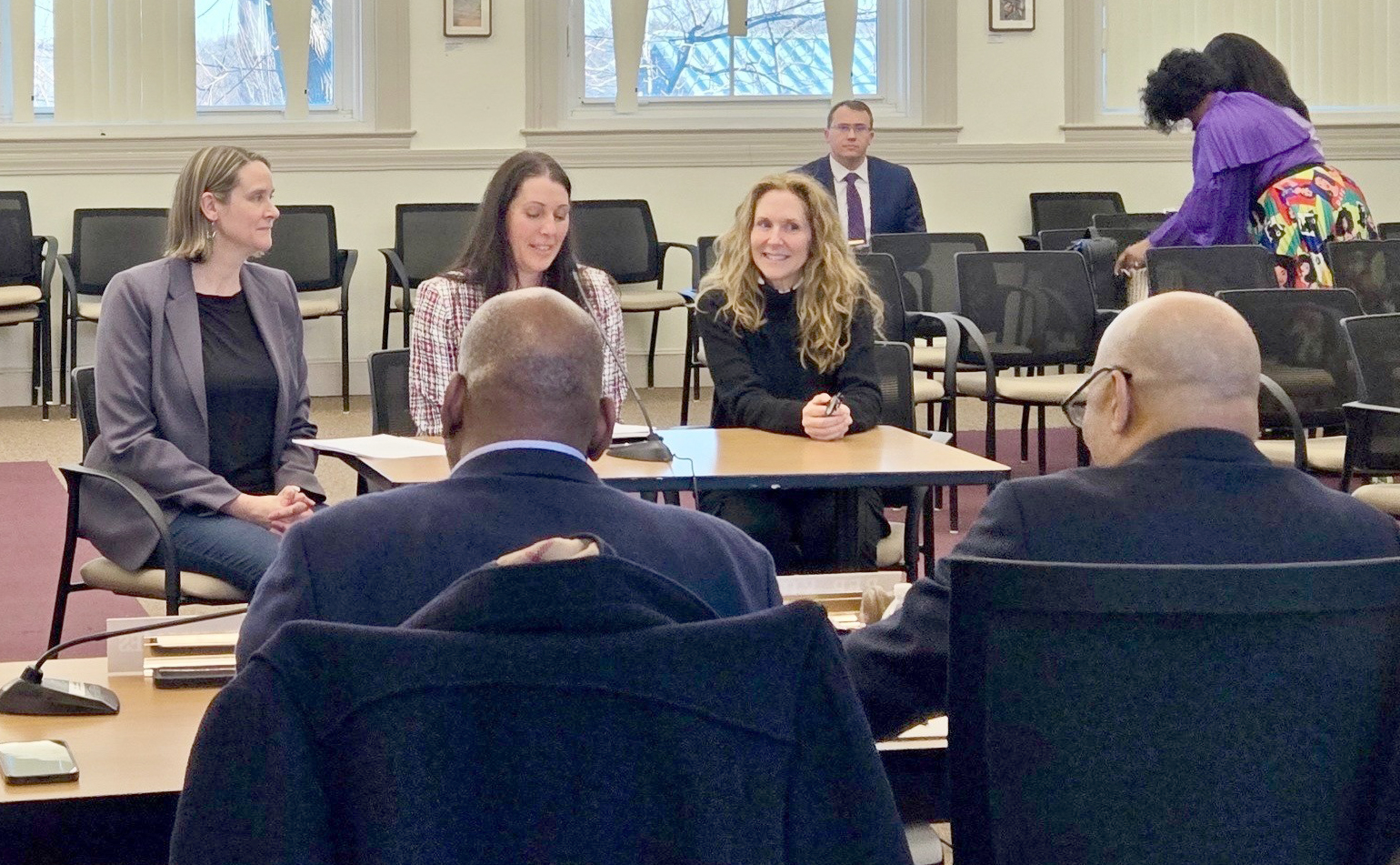
Thank you for the opportunity to testify today here at Barnstable Town Hall, which we note with pride is in the heart of the Hyannis HyArts Cultural District.
For the record, my name is Bethann Steiner, Senior Director of Public Affairs at Mass Cultural Council, the Commonwealth’s independent state arts agency. I am joined today by my colleague, Jen Lawless, Senior Director of Program Operations and Council Member Julie Wake.
We bring greetings from our Acting Executive Director, David Slatery, who is currently in Marblehead celebrating with grant recipients from communities north of Boston. He sends his sincere regrets that is unable to be with us today.
We are honored to be here on behalf of Massachusetts’ vibrant cultural sector to outline Mass Cultural Council’s Fiscal Year 2027 funding request.
First, I want to express our sincere gratitude for this Committee’s longstanding partnership and support. Time and again, you have demonstrated an understanding that arts and culture are not a luxury, but a core economic and community asset for the Commonwealth.
We look forward to continuing our collaboration with you to advance strategic investments that strengthen communities, support jobs, and enhance Massachusetts’ economic competitiveness.
Today, we offer an update on the scale, impact, and growing needs of the Massachusetts cultural sector — and how targeted state investment continues to deliver measurable returns.
FY27 Funding Request
Mass Cultural Council respectfully requests that the Committee retain the Governor’s House 2 recommendation of $27,348,072, approximately $27.35 million, and again include a funded $25,000 earmark for the Official Poet Laureate of the Commonwealth.
This represents a modest five-percent increase over our current operating budget, yet it would allow meaningful expansion of grants supporting creative individuals, youth arts access, and operating support for cultural organizations statewide.
It would strengthen Local Cultural Councils, Tribal Cultural Councils, and the Cultural Districts Initiative, programs that ensure state investment reaches every city and town in Massachusetts.
This funding also enables continued progress towards Mass Cultural Council’s equity and advancement goals by expanding engagement with historically underserved communities and deepening cross-sector partnerships that create new economic opportunities for creative workers and cultural organizations.
At $27.35 million, this would be the largest operating budget in our Agency’s history, and one that directly advances priorities outlined in both the Commonwealth’s Economic Development Plan and Mass Cultural Council’s Strategic Plan.
In January, the Governor noted in her State of the Commonwealth Address that arts and culture are a vital and coveted asset here, contributing to Massachusetts’ economy, and her budget recommendation reflects that.
Economic & Cultural Impact
The cultural sector is a major contributor to Massachusetts’ economy.
According to the U.S. Bureau of Economic Analysis, arts, culture, and creative industries generate nearly $30 billion annually, representing roughly four percent of the Commonwealth’s economy.
The sector supports more than 130,000 jobs statewide, contributing to tourism, hospitality, education, innovation, and small business growth.
Our 2024 Cultural Asset Inventory shows Massachusetts is home to more than 15,000 cultural organizations and 112,000 creative professionals, approximately three percent of the state’s workforce.
These are real jobs with real economic impact. Cultural activity strengthens local supply chains, drives visitor spending, revitalizes downtowns, and helps create vibrant communities where people want to live, work, and invest.
It is no coincidence that Massachusetts was recently ranked the fourth most arts-vibrant state in the nation by SMU DataArts – putting the Commonwealth in the top 4 for the third consecutive year.
Our cultural leadership is the result of sustained public investment, and continued investment is essential to maintaining that position.
Programmatic Reach & Growing Demand
Good afternoon, again, my name is Jen Lawless. As Director of Program Operations, I am able to discuss how Mass Cultural Council invests its budget monies into the sector, largely through our programs and services.
The Governor’s recommendation is especially critical because Mass Cultural Council faces substantial and growing unmet need each year.
Since COVID-19, every grant program we administer has become dramatically more competitive. We are declining more eligible applicants, your constituents, than ever before, not because they lack merit, but because resources are limited.
From Becket to Barnstable, demand continues to grow.
In Fiscal Year 2026 alone, Mass Cultural Council received 19,928 applications, a 65-percent increase since FY21.
This year we awarded a historic $2.32 million to 464 artists, yet we were forced to decline 85 percent of eligible applicants.
Programs supporting organizations experienced similar pressure: 2,324 organizations applied, a 80-percent increase since FY21. While we are proud to support 1,622 organizations this year, roughly 700 worthy and impactful organizations are not receiving direct funding from the agency.
Demand is not slowing. In fact, we find the need is accelerating.
Financial Health of the Sector
This year, we conducted an analysis of 367 operating-support grantees using IRS data and we found some concerning trends:
One-in-four cultural organizations is operating with both a deficit and dangerously low cash reserves.
Sixty-nine percent saw their reserves decline year over year.
Smaller organizations, particularly those with budgets under $1 million, are increasingly financially fragile.
We worry that without strategic intervention and investment, manageable stress risks will become widespread organizational failure.
This analysis makes clear that Mass Cultural Council’s appropriation is not simply support for the arts, it is a smart, data-driven investment that stabilizes an important economic sector.
Yet, to end on a positive note, I do want to share that this year, in FY26, our Spending Plan calls for Mass Cultural Council to award a minimum of 2,200 grants across all programs, totaling approximately $26.2 million.
We are well on our way to achieving this goal, as almost all our grant awards have been approved by the Council, with only the FY26 Cultural Facilities Fund applications still under review. Those are expected to be announced in May.
Once all grant-making is complete, Mass Cultural Council staff will produce a FY26 Grant Report detailing investments across all programs in every legislative district, as well as in every county, and deliver them to you and your colleagues.
For transparency and to show how we steward these public resources you provide to us, we will also publish the new reports on our website. This should be done in June.
Poet Laureate
Last year, through Executive Order, the Governor established the position of Official Poet Laureate of the Commonwealth and appointed Regie Gibson as Massachusetts’ first Poet Laureate.
Many of you may have heard Regie a week ago in the Great Hall of the State House, when he spoke so eloquently during Creative Sector Advocacy Day.
With the Committee’s support, the FY26 budget included a $25,000 earmark to provide an honorarium for this public service.
In his first year alone, Poet Laureate Gibson participated in more than 40 public events across Massachusetts, presenting, teaching, and engaging residents through language and storytelling.
We respectfully request continuation of this earmark.
A dedicated stipend ensures that the Commonwealth’s ambassador for language, literacy, and civic expression can travel statewide, create public work, and serve communities with dignity and accessibility.
Supporting this role reflects Massachusetts’ commitment to creativity, education, and civic engagement.
While the Poet Laureate works independently of Mass Cultural Council, we feel strongly that it is important for artists to be paid for their work. In FY26 the Legislature decided to handle this with a funded earmark, and we encourage you to continue that practice.
Conclusion
Mass Cultural Council is proud to steward one of the most dynamic cultural sectors in the nation.
We respectfully urge your support for a $27.35 million FY27 appropriation and continuation of funding – $25,000 – for the Poet Laureate.
Investment in Mass Cultural Council delivers measurable returns, economically, culturally, and socially. Every public dollar invested strengthens jobs, communities, creative industries, and the quality of life that makes Massachusetts globally competitive.
Together, we can ensure that Massachusetts remains a national leader in arts and culture, and that the creative workforce continues to serve as innovators, economic drivers, and collaborative partners across sectors.
Every year we strive to invest the public dollars you provide us creatively, so the entire Commonwealth is empowered by creativity.
Thank you for your time and consideration. We welcome your questions and are happy to provide any additional information.