Lisa Simmons, Program Manager
For more than 45 years, Mass Cultural Council has invested in culture at the local level through the Local Cultural Council (LCC) Program, which supports volunteer councils in cities and towns across the Commonwealth to make community‑driven grant decisions.
Our LCC Program is unique as it is the largest grassroots, volunteer-led arts and culture funding network in the country. However, as it was enacted through state law, it was designed in such a way to work with municipalities, but not sovereign Tribal nations. It didn’t always fit with how Tribal communities organize, or how they define public and community benefit.
Through our racial equity work, including the Native American & Indigenous Peoples Equity Plan, the Agency has been convening Native American and Indigenous leaders and partners to help guide and strengthen our commitments to Tribal nations and Indigenous communities across the Commonwealth.
Two years ago they helped us create a grant program where Tribal governments create and lead their own councils, the Tribal Cultural Council Program.
These new Tribal Cultural Councils (TCCs) – modeled after, but not a copy of the LCCs – receive state funds and then regrant those funds to projects in the arts, humanities, and sciences that provide benefit to their communities and define and support their own cultural priorities, grounded in their sovereignty and right to self-determination.
There are currently four Tribal Cultural Councils:
After its first two grant cycles, the TCC Program has granted more than $120,000.
As Program Manager for the Communities Initiative, my role is to make sure the statewide TCC Program framework is clear and consistent while leaving real decision‑making power at the Tribal level, and to provide guidelines that set out basic requirements and funding criteria, without overriding Tribal policies and procedures.
Applicants to a TCC must be in Massachusetts, but from there, TCCs have flexibility in who they choose to support within broad eligibility categories and specific priorities and guidelines from the council.
The most powerful way to understand this program is to look at the kinds of projects TCCs choose to support over their first two grant cycles:
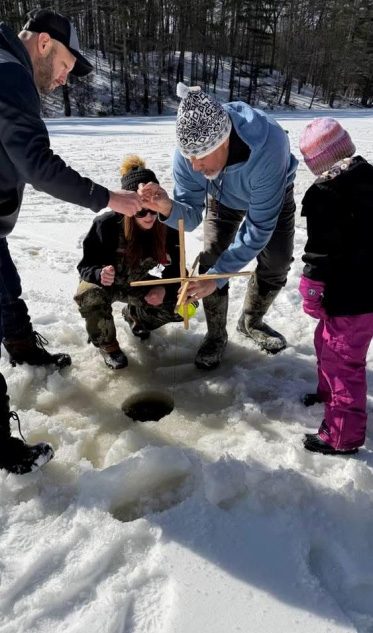
- Nipmuc/k Cultural Council funded Nipmuc Cultural Hunt and Fish, a 3rd annual ice fishing event at Norcross Ma. The goal was to bring Nipmuc/k community together and learn how to fish on the ice. The events provided safety and fishing instruction, food preparation, and fun for all. This event has been growing each year and the community building to revive traditional ways has an ever increasing awareness. Nipmuc Cultural Hunt and Fish was started by Ite Santana as an organization to help bring food sovereignty and cultural revitalization to the Nipmuc people.
- Herring Pond Wampanoag Cultural Council funded Engaging Cedarville Community Voices, a project that brought together Tribal environmental staff, culture bearers, and youth to explore traditional ecological knowledge in relation to local waterways and plant life. Funding supported field trips, honoraria for presenters, and materials for hands‑on activities like water testing, mapping, and plant identification, integrating Indigenous science with classroom science standards.
- Aquinnah Cultural Council funded Adornment and Identity: Traditional Eastern Woodlands Regalia Workshops, a continuation of its collaborative regalia-making program with the Wampanoag Tribe of Gay Head (Aquinnah) Education Department for monthly instruction in traditional Eastern Woodlands regalia. The program serves 20 participants – 10 youth and 10 adults – through hands-on, intergenerational workshops that emphasize shared learning between parents, elders, and youth. These classes build on a successful teaching model that has already helped more than a dozen Aquinnah Wampanoag citizens make regalia that strengthens cultural continuity.
- Mâseepee Cultural Council funded Native American Preserving Food Techniques, a project passing down traditional stories, harvesting techniques and knowledge, including processing and preserving. As a coastal nation, their traditional diet primarily came from the sea. This workshop will get their youth in the water to fish what their ancestors have always fished, while learning contemporary techniques to preserve fish for use during the winter months. CheeNulka Pocknett, a tribal fishermen, hunter, and educator, has been preserving food for his family for more than 20 years. His traditional ecological knowledge will be passed down from generations as part of this project.
These examples are different in discipline and format, but they share a common thread: each is defined by the Tribal community itself as meaningful, and each uses arts, humanities, or sciences to strengthen identity, relationships, and knowledge.
For me, as someone with ties to the Native Massachusetts community, I get excited at seeing how funds are being used to sustain and enrich community.
The Tribal Cultural Council Program is heading into its third grant cycle in September. We are learning from each passing grant cycle and refine how we support TCCs and stay responsive to feedback from Tribal governments and Indigenous artists.
Looking ahead, my hopes are simple and ambitious at the same time:
- That the TCC Program continues to deepen recognition of Tribal sovereignty within public cultural funding in Massachusetts.
- That more Native artists, youth, elders, and culture bearers see this funding as a resource that is truly for them—and shaped by them.
- That relationships between Tribal Cultural Councils, Local Cultural Councils, and the wider cultural sector grow stronger, so Indigenous creativity is understood as central to our Commonwealth’s cultural life, not peripheral.
If you are a Tribal community member, artist, or culture bearer, I hope you’ll consider connecting with your Tribal Cultural Council, maybe attending an event, applying for a grant, or even serving on the TCC. The program is only as strong as the communities who shape it, and for me, that is exactly what makes this work so important.